
Revolutionizing Retail: 5 AI Fashion Apps Shaping the Future of E-Commerce
- Reekolect.ai

- Apr 6
- 3 min read
The fashion industry is experiencing a technological renaissance. Retailers and designers are moving beyond basic algorithms to embrace Artificial Intelligence that solves real, expensive problems—from fit issues to supply chain waste.
To bridge the gap between imagination and execution, we have outlined five groundbreaking AI fashion applications. These aren't just concepts; they are the blueprints for the next generation of retail technology.
Here is a look at five AI-powered apps designed to disrupt the status quo and deliver massive business outcomes.

1. TwinFit: 3D Virtual Try-On
Focus: Solving the "Fit-Gap" in E-Commerce.
The biggest overhead in online fashion is fit-related returns. TwinFit eliminates the guesswork by allowing customers to truly see how a garment will look and move on their specific body.
Mobile Body Scanning: Uses computer vision to create a millimeter-accurate 3D avatar from just a 30-second user video.
Fabric Physics Engine: Simulates the specific "hand" of fabrics, distinguishing how heavy denim resists movement versus how silk flows.
Dynamic Motion Preview: Allows the user's avatar to walk, sit, or dance to show exactly where a garment might pinch or pull.
The Outcome: Retailers see a 30–50% drop in fit-related returns. Customers gain the confidence to purchase expensive or uniquely tailored pieces, knowing exactly how they will drape.

2. Trend-to-TechPack: Design Automation
Focus: Speed-to-Market for Manufacturers.
Taking a design from a mood board to the factory floor is notoriously slow. This app compresses the timeline by automating the heavy lifting of the technical design phase.
Generative Ideation: Converts simple text prompts (e.g., "90s grunge meets futuristic techwear") into dozens of high-fidelity garment renders.
Automated Tech Packs: Instantly generates technical "flats" (2D drawings), size grading charts, and a comprehensive Bill of Materials (BOM).
Fabric Compatibility Check: An AI auditor flags if a chosen design is physically impossible with a specific fabric weight before sampling even begins.
The Outcome: The design-to-prototype cycle shrinks from 4 weeks to 48 hours, eliminating the need for multiple physical samples and saving thousands in material costs.

3. EcoTrace: Sustainability Auditor
Focus: Compliance and Brand Trust.
With strict "Green Claims" and supply chain transparency laws rolling out in 2026, brands can no longer afford to guess about their sustainability metrics.
Digital Product Passport (DPP): Generates a unique QR code for every garment, tracking its journey from raw fiber to the retail shelf.
Risk Heatmaps: Predictive analytics scan global news and data to flag potential labor or environmental risks deep in the supply chain.
Carbon Score Calculator: Automatically calculates the CO2 and water footprint based on factory location and material composition.
The Outcome: Ensures regulatory readiness while building deep, radical transparency and brand loyalty with Gen Z and Alpha consumers who demand ethical proof.

4. CapsuleGPT: Agentic Wardrobe Manager
Focus: Hyper-Personalized Post-Purchase Styling.
Customer engagement shouldn't end at checkout. CapsuleGPT turns a user's closet into an intelligent, digitized styling assistant.
Multimodal Closet Digitization: Users snap photos of their clothes; the AI removes backgrounds, tags items, and organizes them into a digital library.
Context-Aware Suggestions: Connects to the user's calendar and local weather to suggest the perfect outfit—like a waterproof, professional look for a 9:00 AM meeting in rainy London.
Gap Identification: Analyzes the wardrobe to suggest exactly one new item to buy that would unlock the most new outfit combinations.
The Outcome: Eliminates decision fatigue, increasing daily app stickiness while driving high-intent sales for "missing pieces" rather than random items.
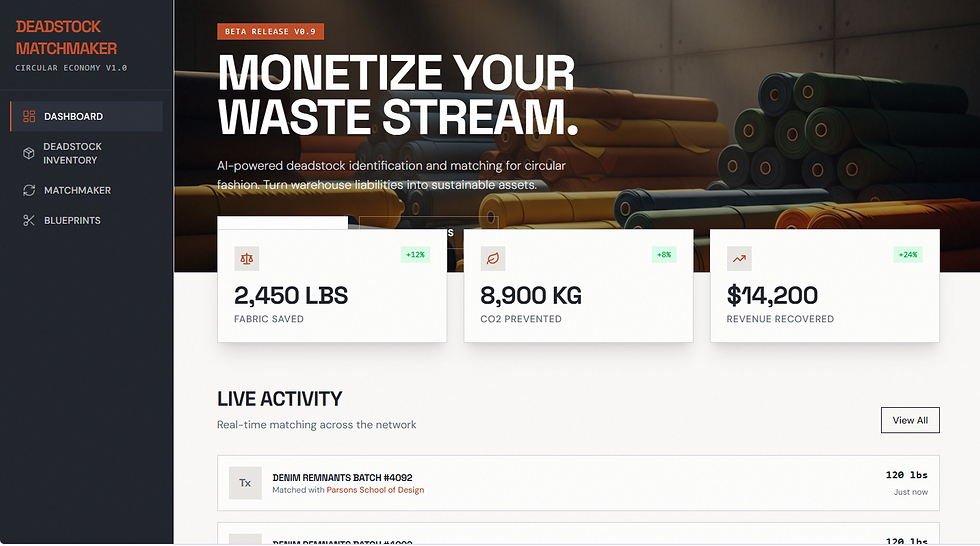
5. Deadstock Matchmaker: Circular Marketplace
Focus: Monetizing Waste.
Unused fabric rolls sitting in warehouses are a sunk cost and an environmental liability. Deadstock Matchmaker turns that waste into a new revenue stream.
Visual Scrap Recognition: Uses AI to identify fabric types, colors, and yardage simply from warehouse photos of leftover rolls.
B2B Connection Engine: Automatically matches scraps with boutique designers or student creators looking for small-batch, high-quality materials.
Upcycling Blueprinting: Suggests specific patterns or garment types that can be made from odd-shaped remnants.
The Outcome: Turns a storage cost into wealth, solidifying a brand's position as a "circular" leader by actively reducing textile waste.
Turn These Concepts Into Your Reality
The technology outlined in these five apps isn't science fiction—it is the competitive edge your brand needs today.
At Reekolect.ai, an AI software company based out of Miami, FL, we specialize in bringing ambitious ideas to life. We build custom AI solutions for businesses that want to automate their workflows, dramatically reduce overhead, and deliver futuristic experiences to their customers. Whether you want to develop a 3D virtual try-on tool or an automated supply chain auditor, our team has the expertise to build it for you.
Ready to build the future of your brand? Contact Reekolect.ai today to start developing your custom AI software solution.


Comments